Tinsel
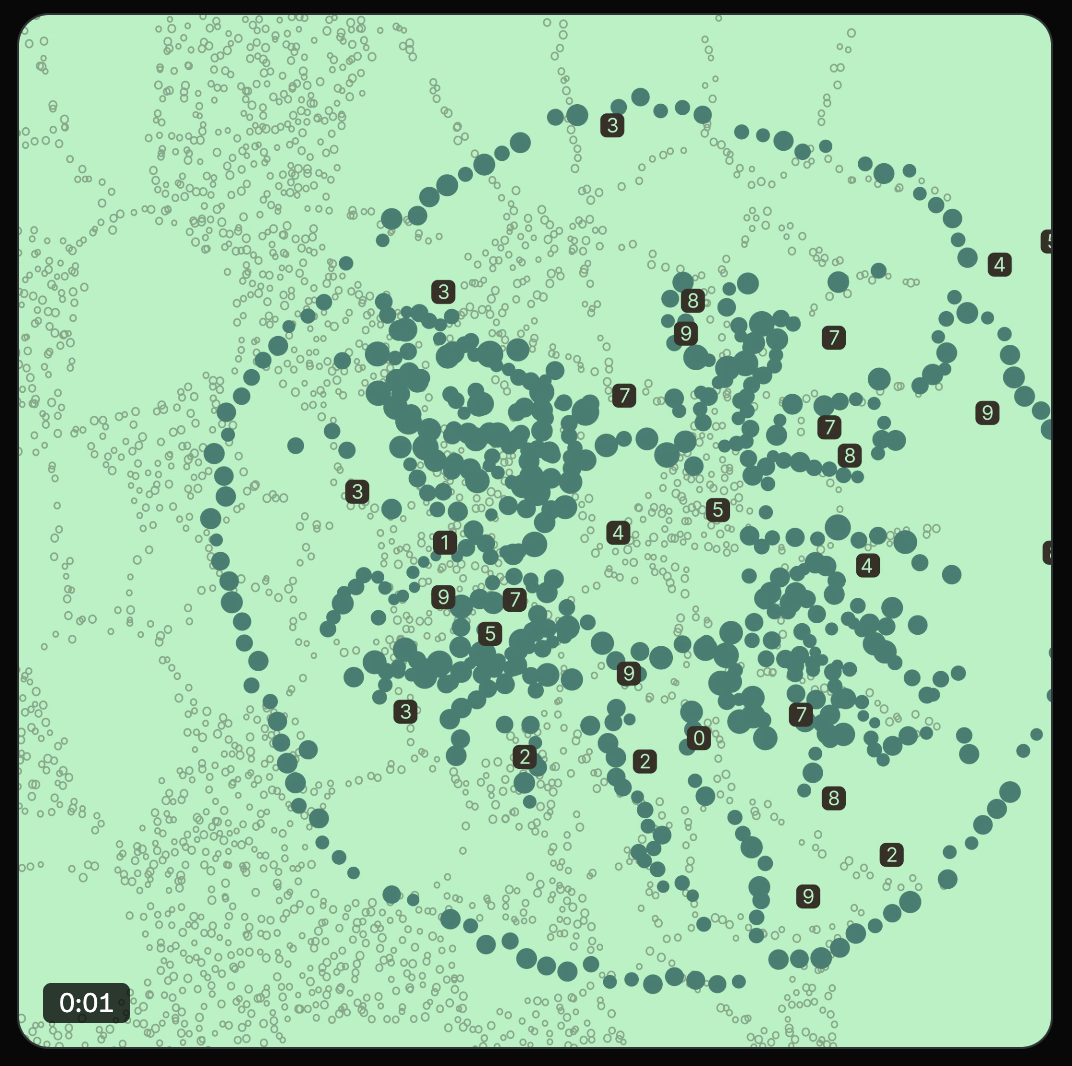
building a force-based alife sim with fable 5.2, including hunting, avoidance, and blended gene inheritance.
🎶 μ-ziq & mrs jynx — secret garden
 harley turan @hturan
Math. Conway. Life.
Imagine studying cellular automata that evolve over years to create vast machine civilizations.
Research on "Multiple Neighborhood Cellular Automata" by @slackermanz, https://linktr.ee/slackermanz, Used with permission.
 Cliff Pickover @pickover
Self-replicating, multi-agent AI systems are an overlooked existential risk.
I want to lay out why I believe this, via example.
Each dot is a simple creature with a randomly evolved NN brain.
There is no training; yet complex, unpredictable survival drives always emerge.1/14
 Fraser Price @fraserpricee
hello friends 🤗
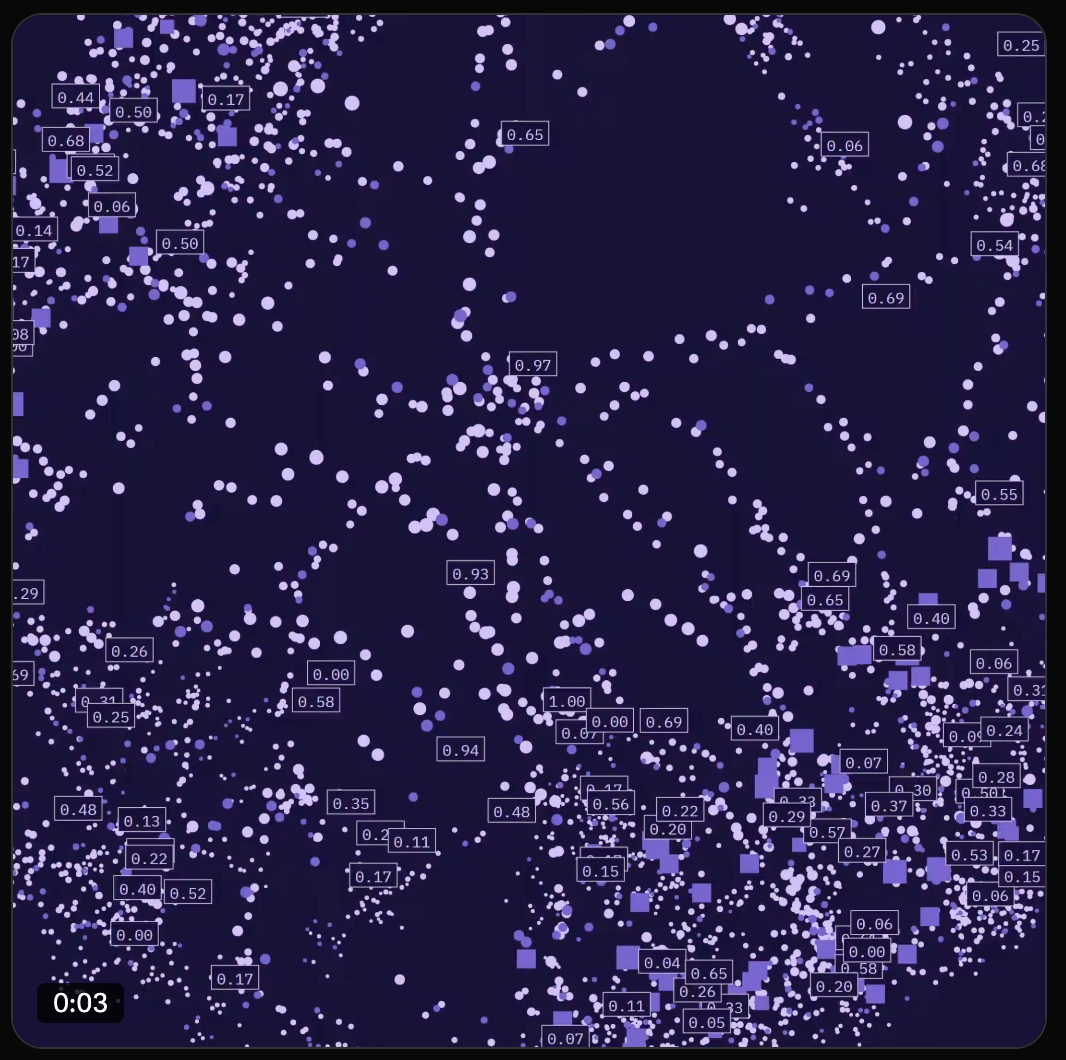
another quick reminder that survival drives and multicellularity is emerging from pure natural selection of randomly mutated untrained neural network particles in a heat🛀
seems im the only one scaling this so im sure its nothing... right? 😅
🔊 🔊 🔊
Fraser Price @fraserpricee babe wake up, survival drives and multicellular organisms are spontaneously emerging from primordial soup again
1/2 full sim + info below
Fraser Price @fraserpricee 👁️ full sim 👁
2/2
Fraser Price @fraserpricee Math. Conway. Life.
Imagine studying cellular automata that evolve over years to create vast machine civilizations.
Research on "Multiple Neighborhood Cellular Automata" by @slackermanz, https://linktr.ee/slackermanz, Used with permission.
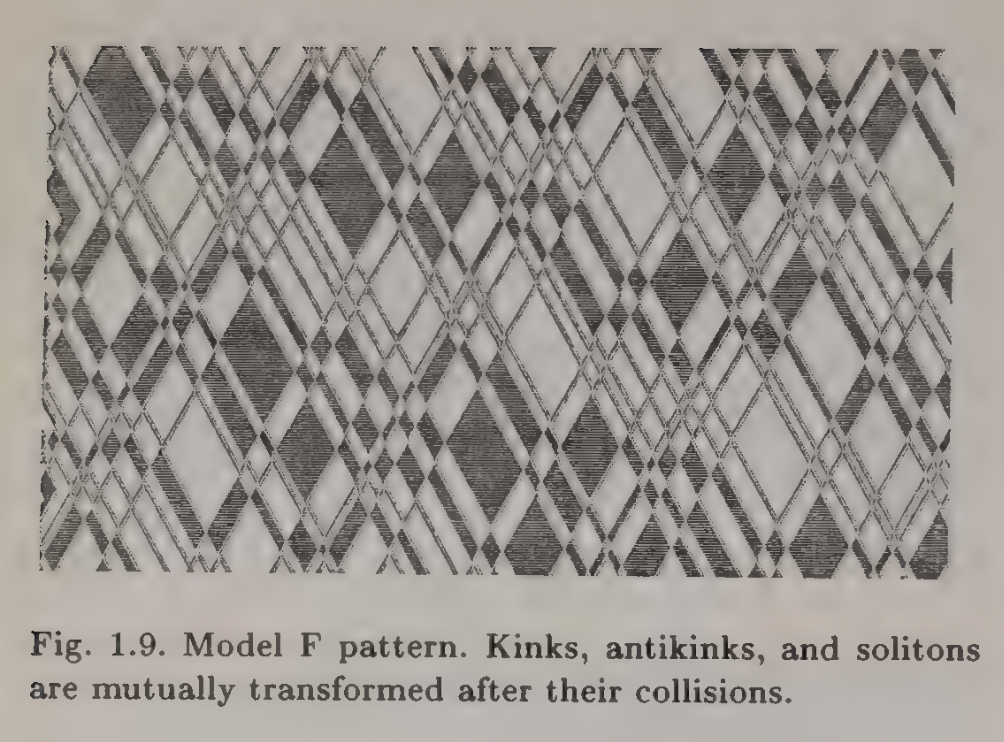
Cliff Pickover @pickover MNCA produce complex emergent patterns, often featuring robust local structures similar to solitons.
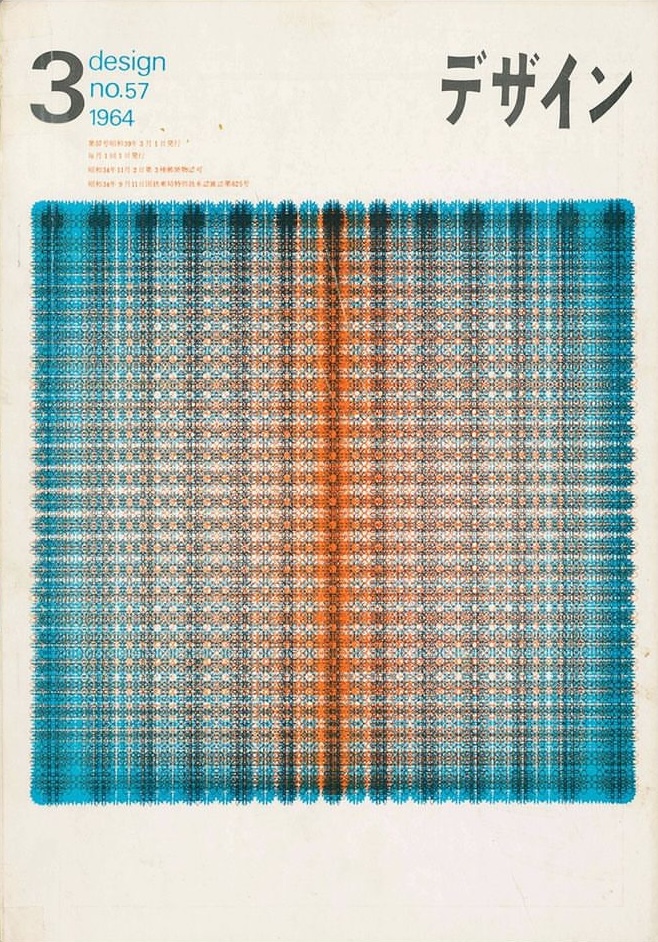
fun: chebyshev behavior map :-P
code:
https://github.com/altunenes/cuneus/blob/main/examples/physarum.rs
#physarum
 enes altun @emportent
fluoddity
I struggle to describe Fluoddity. Think somewhere between interactive lava lamp and evolvable ant farm.
An interactive lava lamp? An evolvable ant farm? Explore a world very different from our own.
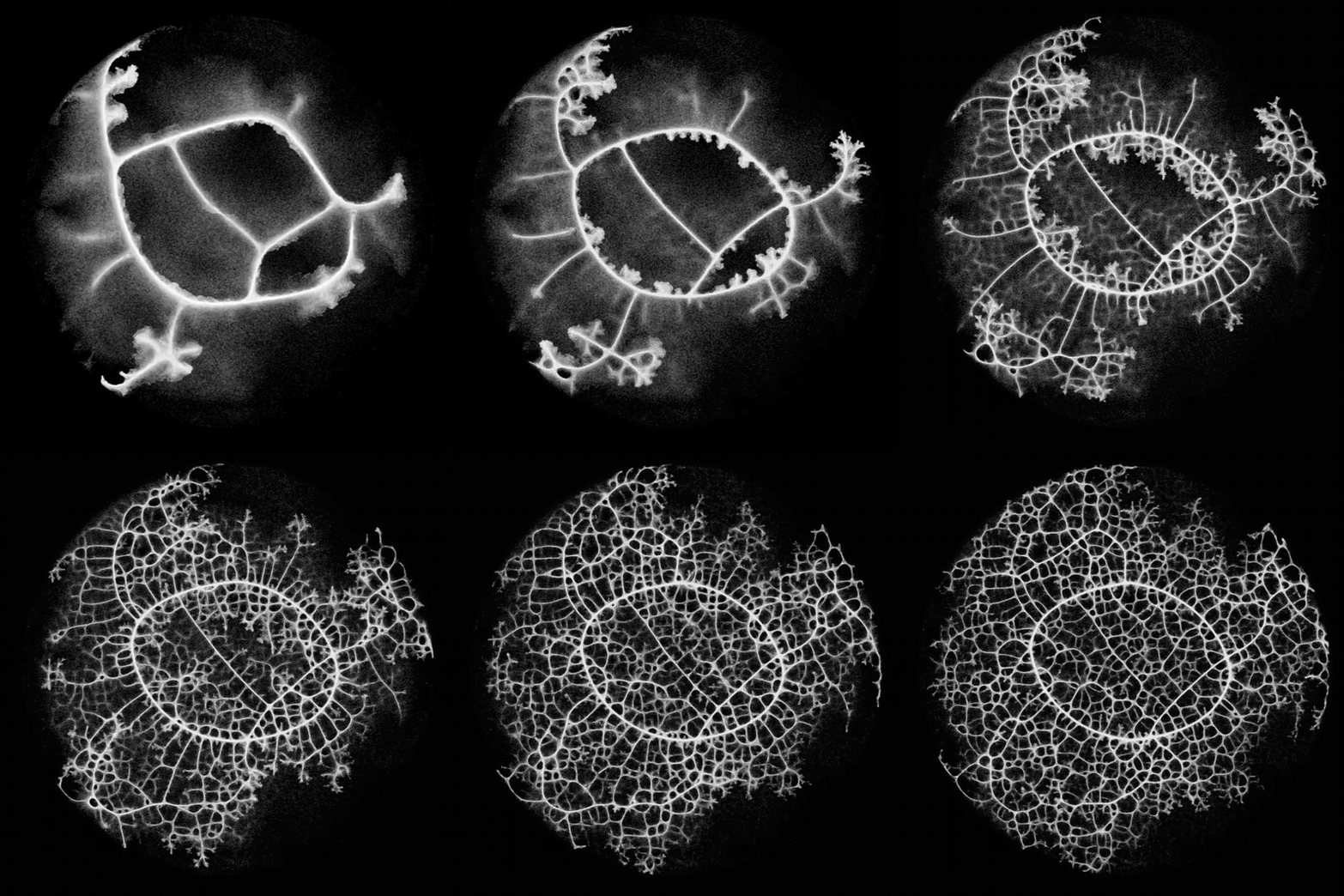
This February I spent a bit of time simulating slime mold (Physarum polycephalum).


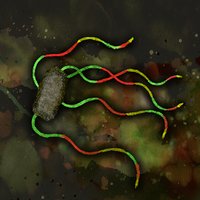
Bacteria have immune systems to defend against their viruses.
This animation shows the proposed mechanism of the Zorya defense system from our work with @NMITaylorLab: a proton-driven membrane complex related to the bacterial flagellar stator.
https://doi.org/10.1038/s41586-024-08493-8
 Marc Erhardt @Salmo_Lab
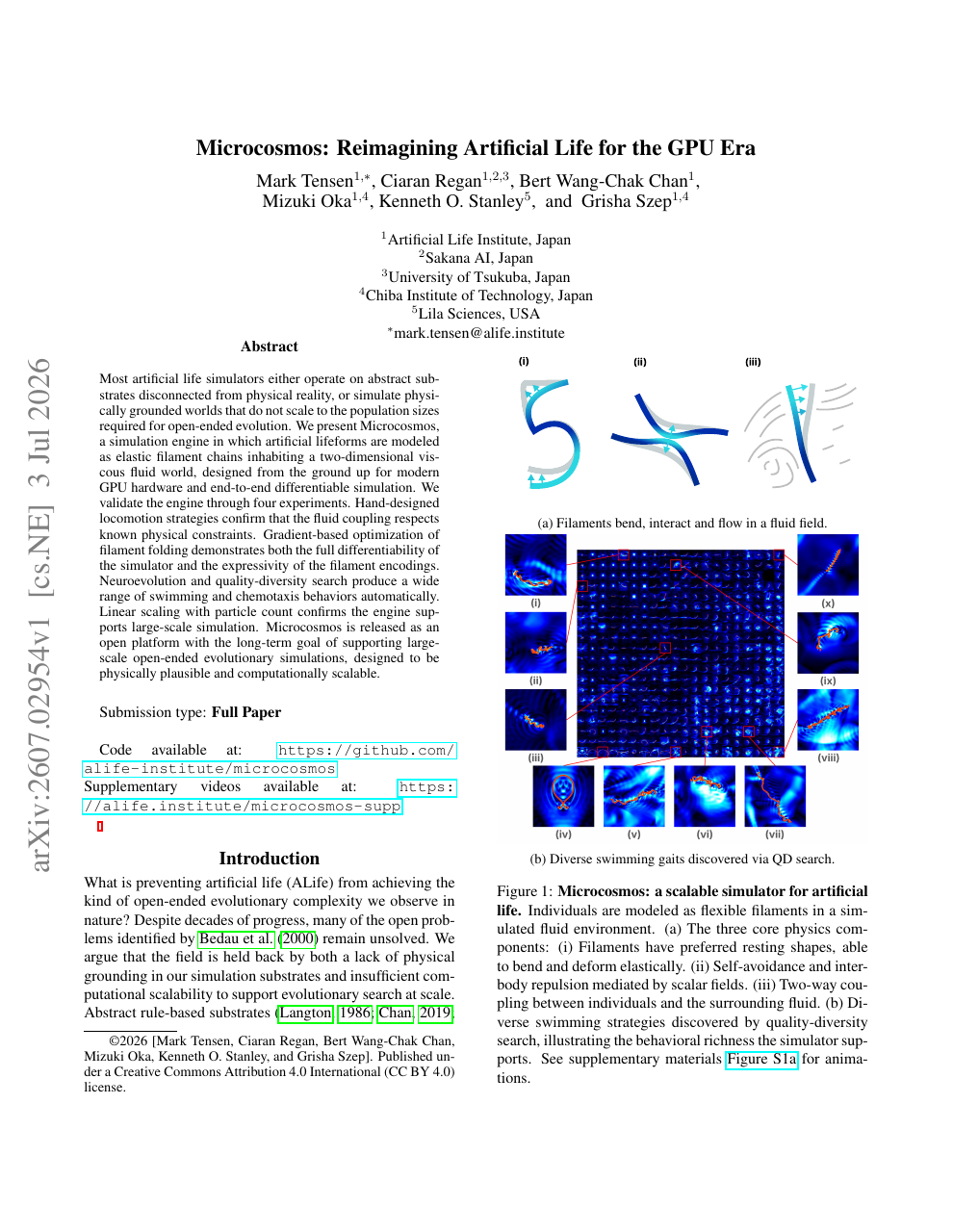
Linear scaling with particle count confirms the engine supports large-scale simulation.
New results!
A model shows how complex brain-like dynamics can emerge from simple interactions between adaptation and network structure, even when individual neurons behave irregularly.
https://doi.org/10.48550/arXiv.2606.30366
#neuroscience
 Earl K. Miller @MillerLabMIT
Only data with still unknown but learnable statistical or algorithmic regularities are truly novel or surprising or interesting and thus deserve attention.
ASAL is agnostic to both the specific FM and the simulation substrate
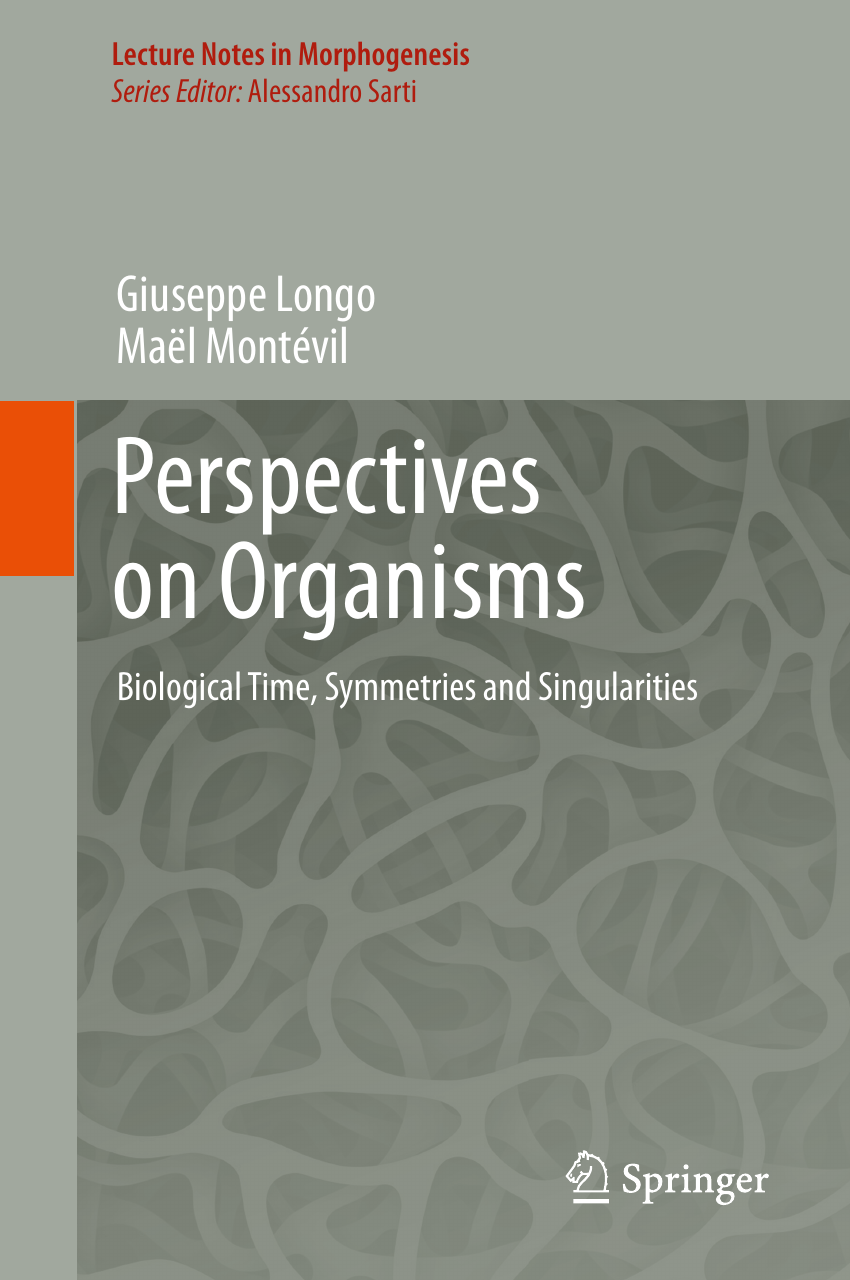
Giuseppe Longo and Maël Montévil. Perspectives on Organisms: Biological Time, Symmetries and Singularities. Springer, 2014.
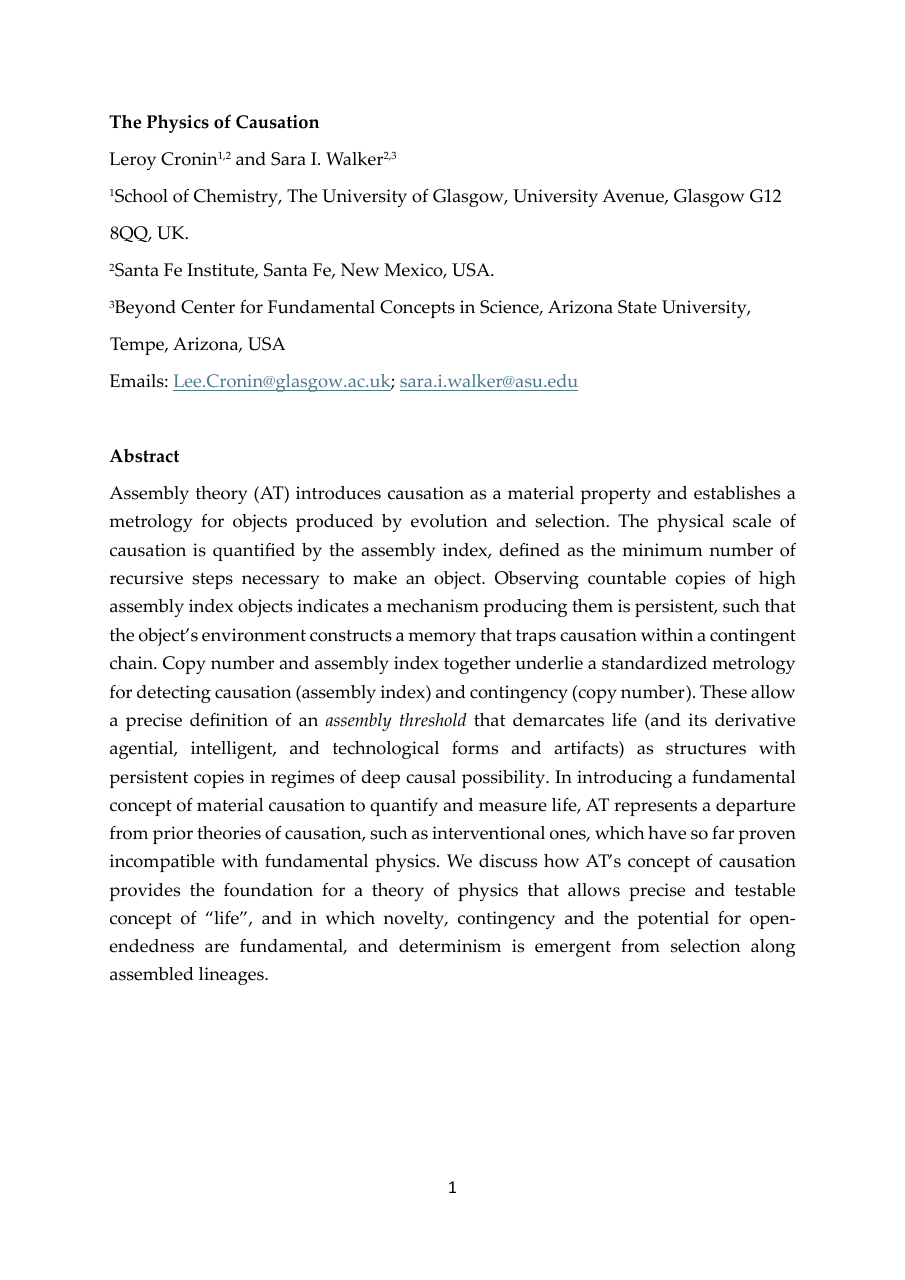
The Physics of Causation - Cronin
Assembly theory (AT) introduces causation as a material property and establishes a metrology for objects produced by evolution and selection.
The two most significant transitions in the evolution of Earth are the emergence of biological lineages from geochemistry19, and the emergence of technological lineages from biology20, where both biological and technological lineages also have many subbranches21.
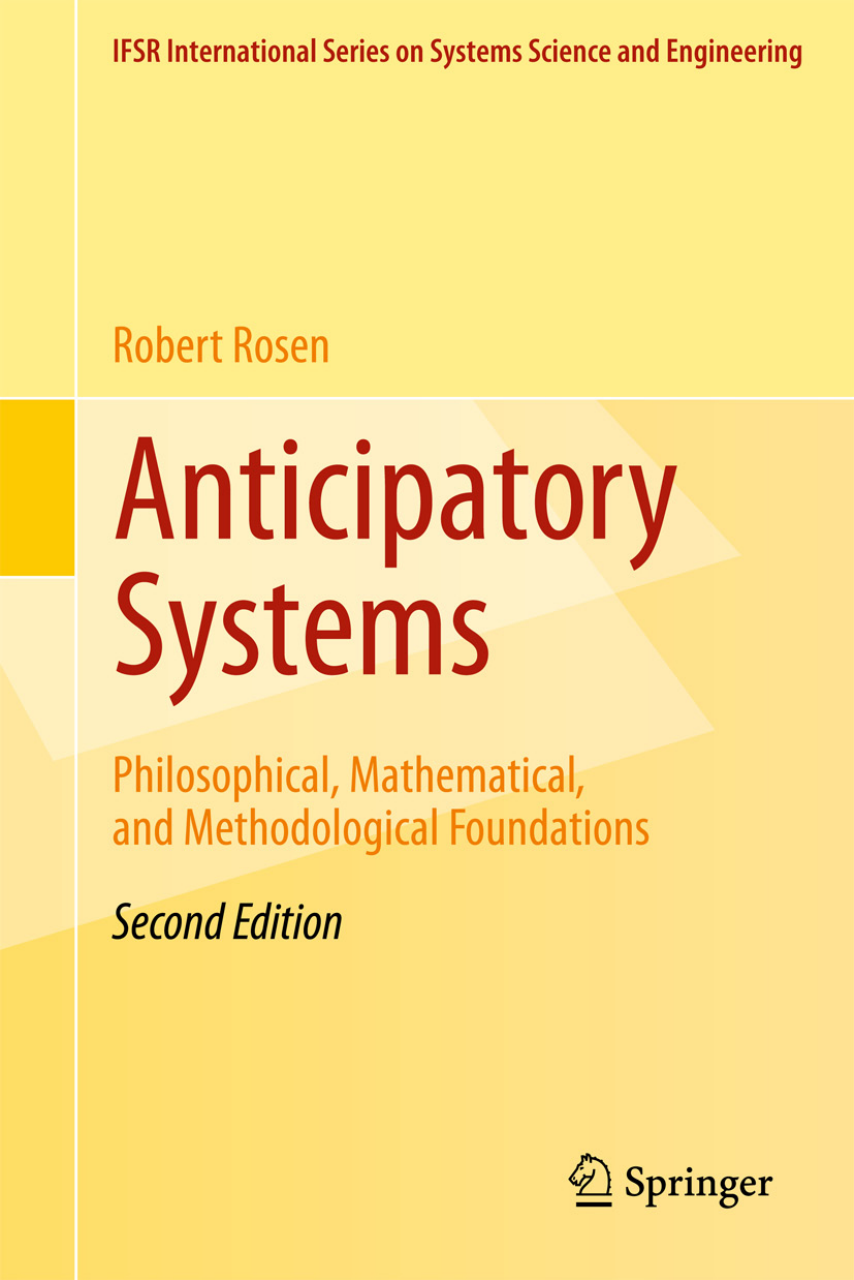
“Strictly speaking, an anticipatory system is one in which present change of state depends upon future circumstances, rather than merely on the present or past. “
Living organisms have the equivalent of one “foot” in the past, the other in the future, and the whole system hovers, moment by moment, in the present – always on the move, through time. The truth is that the future represents as powerful a causal force on current behavior as the past does, for all living things. And information, which is often presumed to be a figment of the human mind or at least unique to the province of human thought and interaction, is actually an integral feature of life, itself – even at the most fundamental level: that of system organization.
Robert Rosen. Anticipatory Systems: Philosophical, Mathematical, and Methodological Foundations. 2nd ed., Springer, 2012.
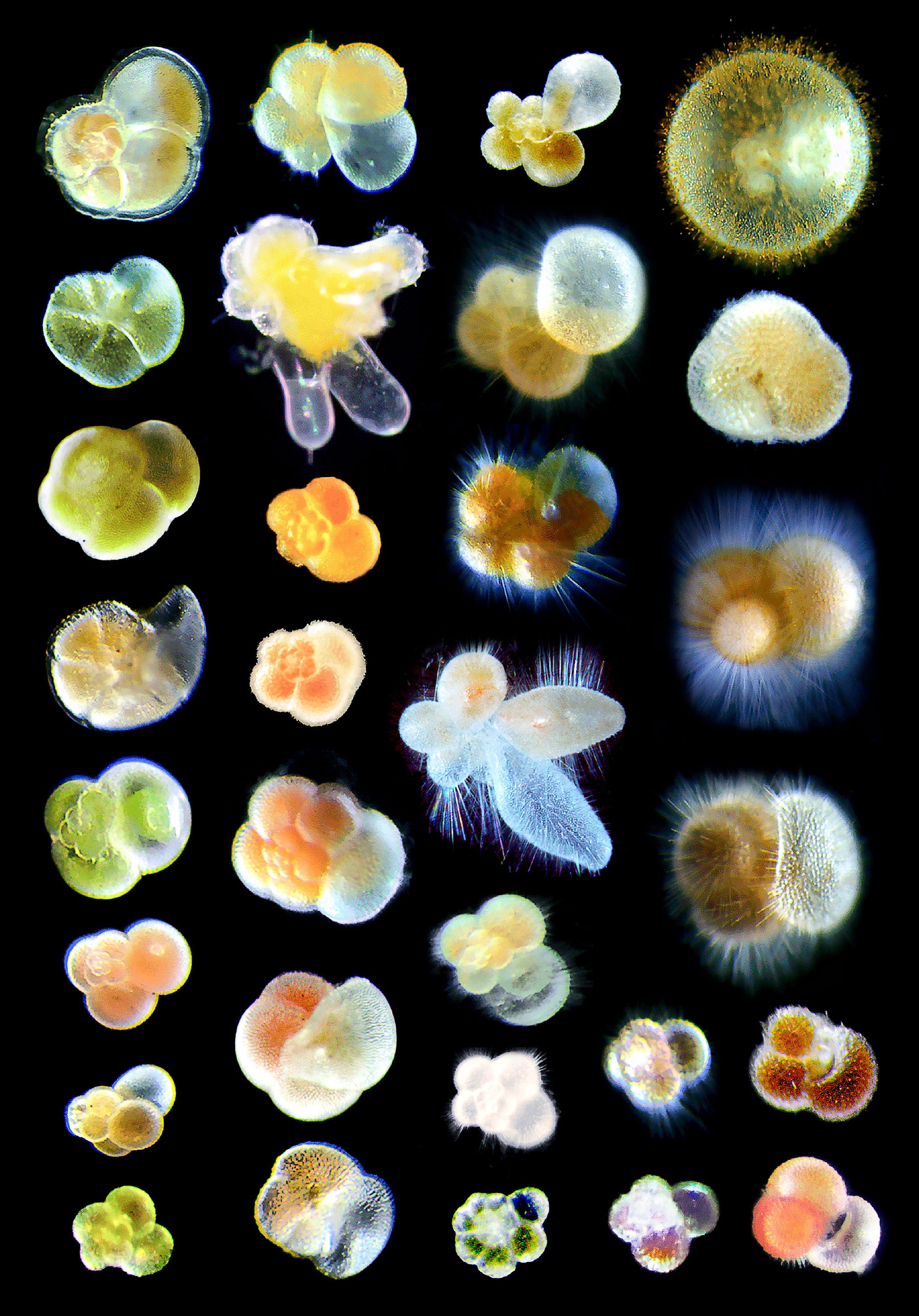
Each marine plankton seen here is smaller than 1 millimeter. Across time, every so often, the spiral direction of quadrillions of these microscopic shells flip in unison in oceans across the world. Scientists have been trying to figure out why since the 1950s. https://www.quantamagazine.org/why-do-these-fossil-shells-flip-their-spirals-every-few-millennia-20260911/
 Quanta Magazine @QuantaMagazine
Why Do These Fossil Shells Flip Their Spirals Every Few Millennia? · Fanni Daniella Szakál, Quanta Magazine, September 11, 2026.
Image via Quanta Magazine, adapted from Haruka Takagi et al., Characterizing photosymbiosis in modern planktonic foraminifera (2019), fig. 2. CC BY 4.0.
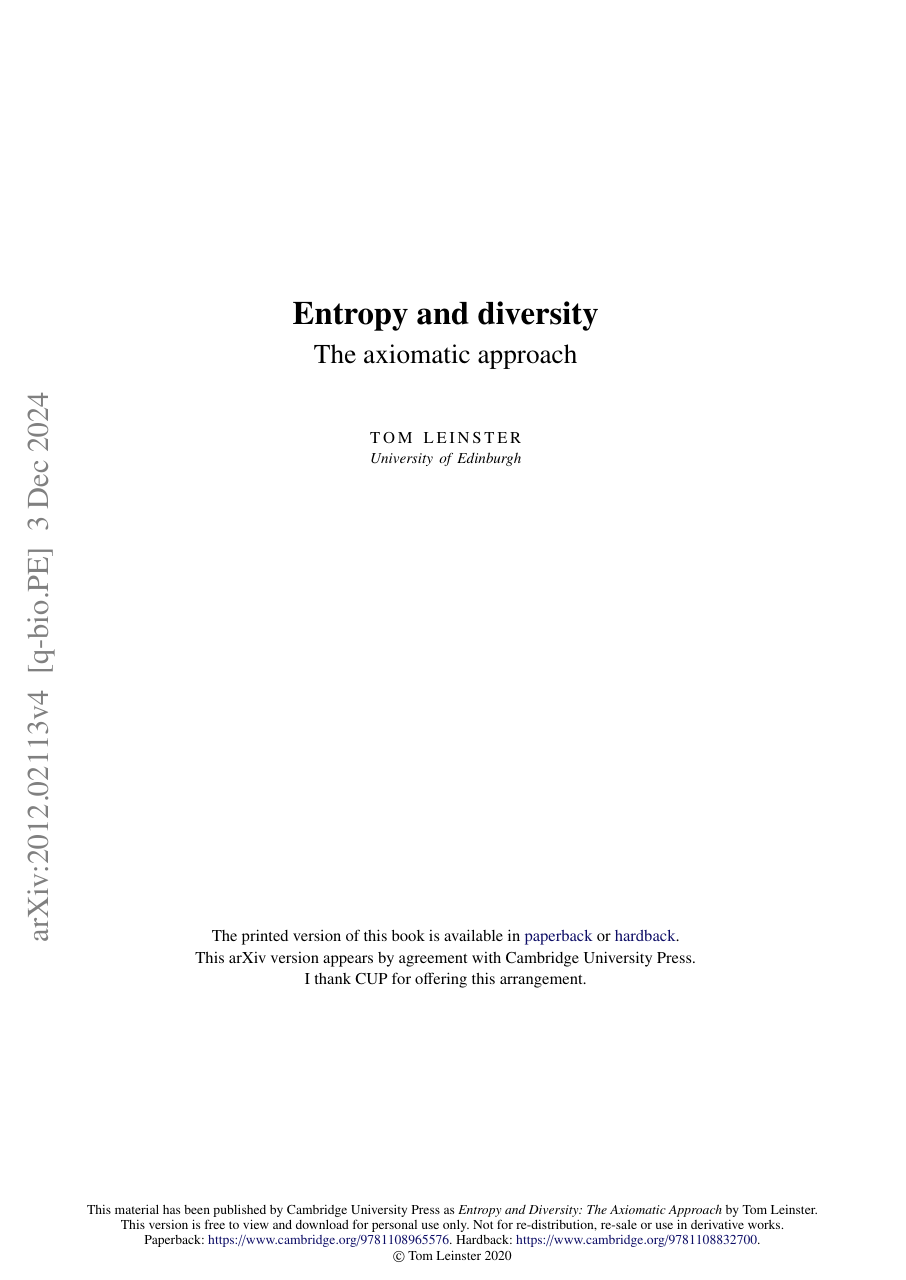
In the real world, diversity is understood as involving not only the number and abundances of the species, but also how different they are.
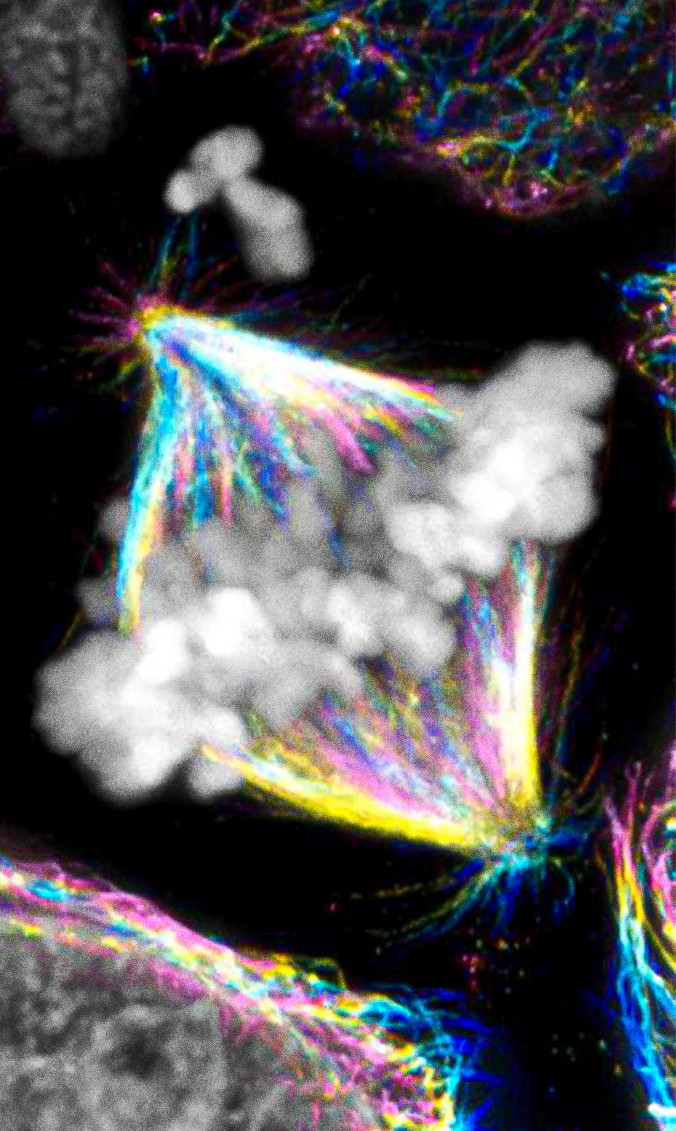

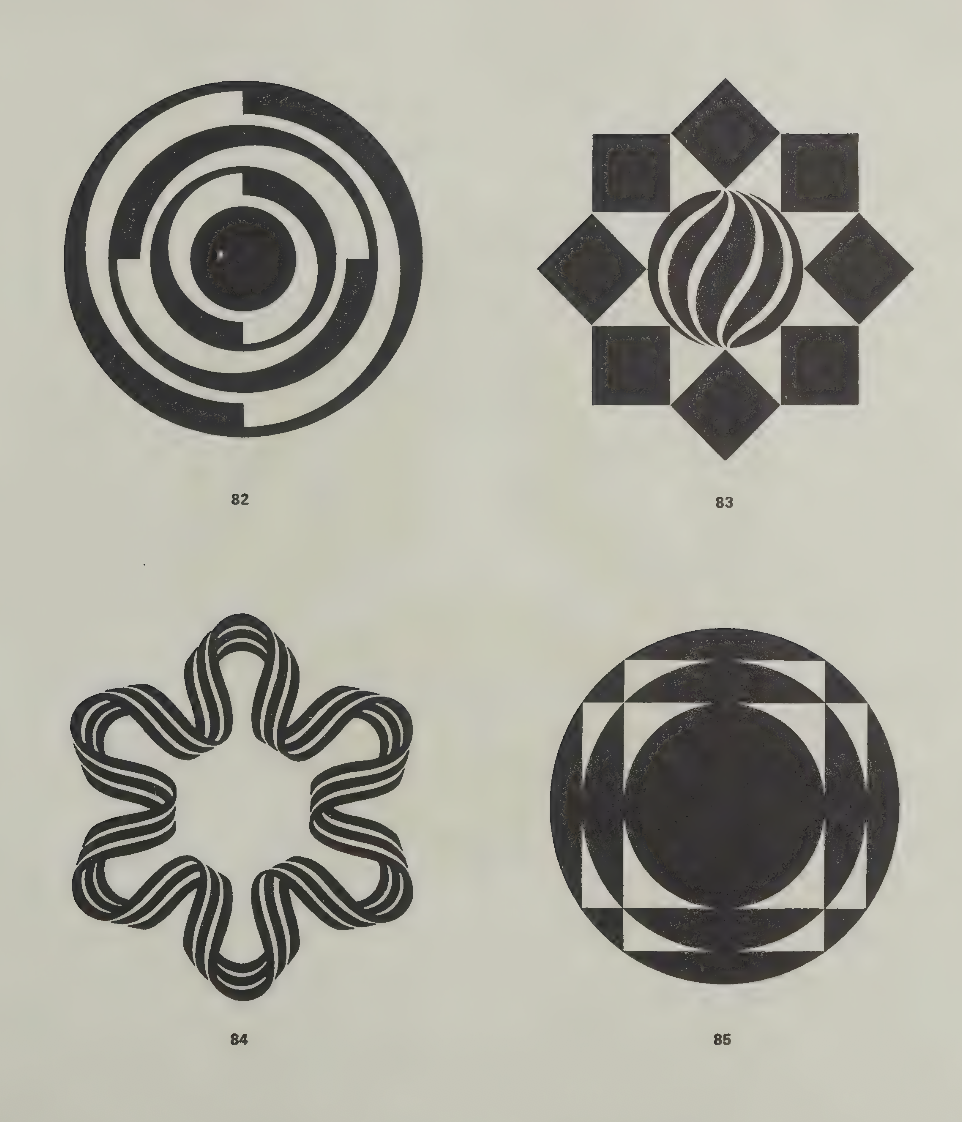


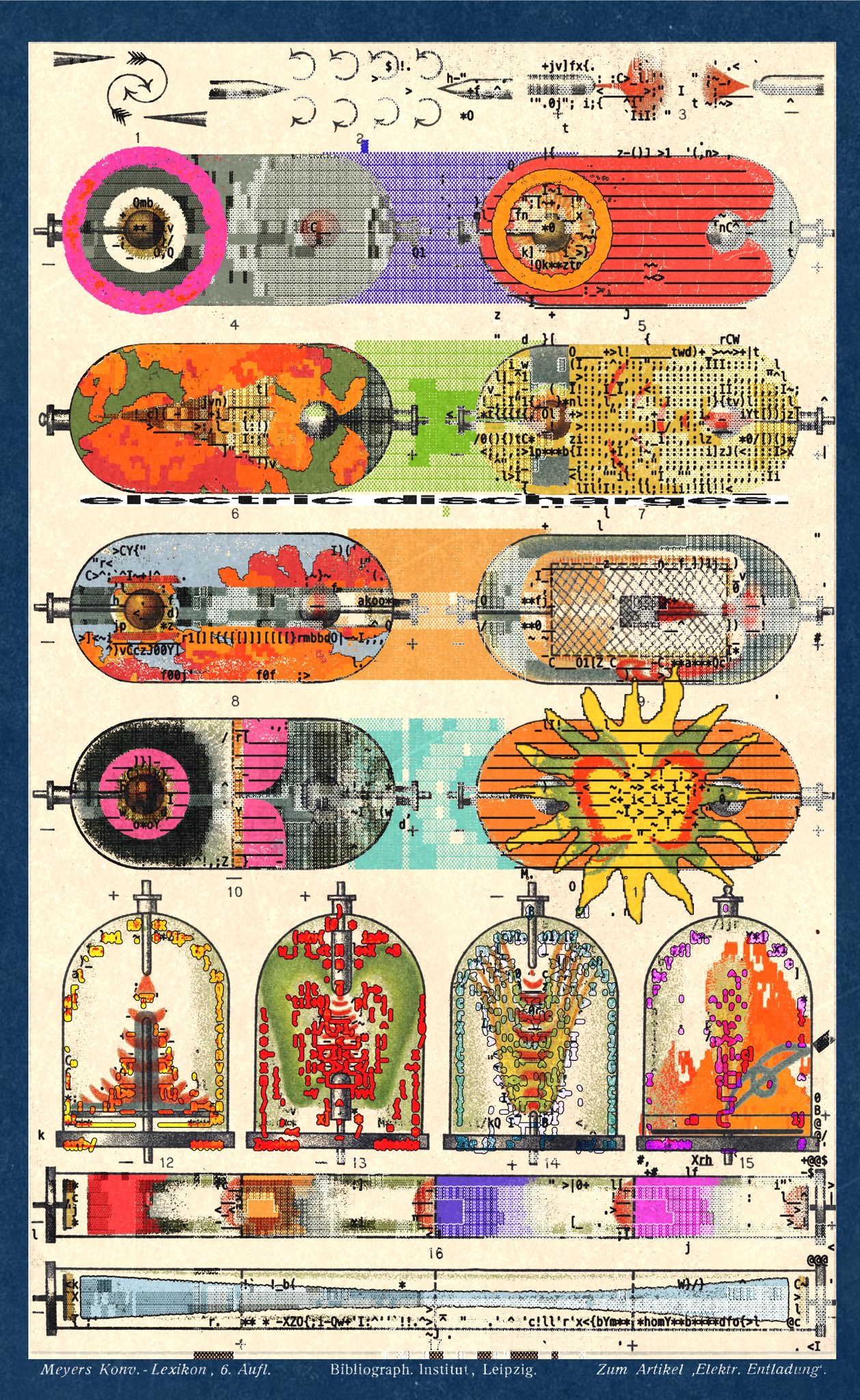
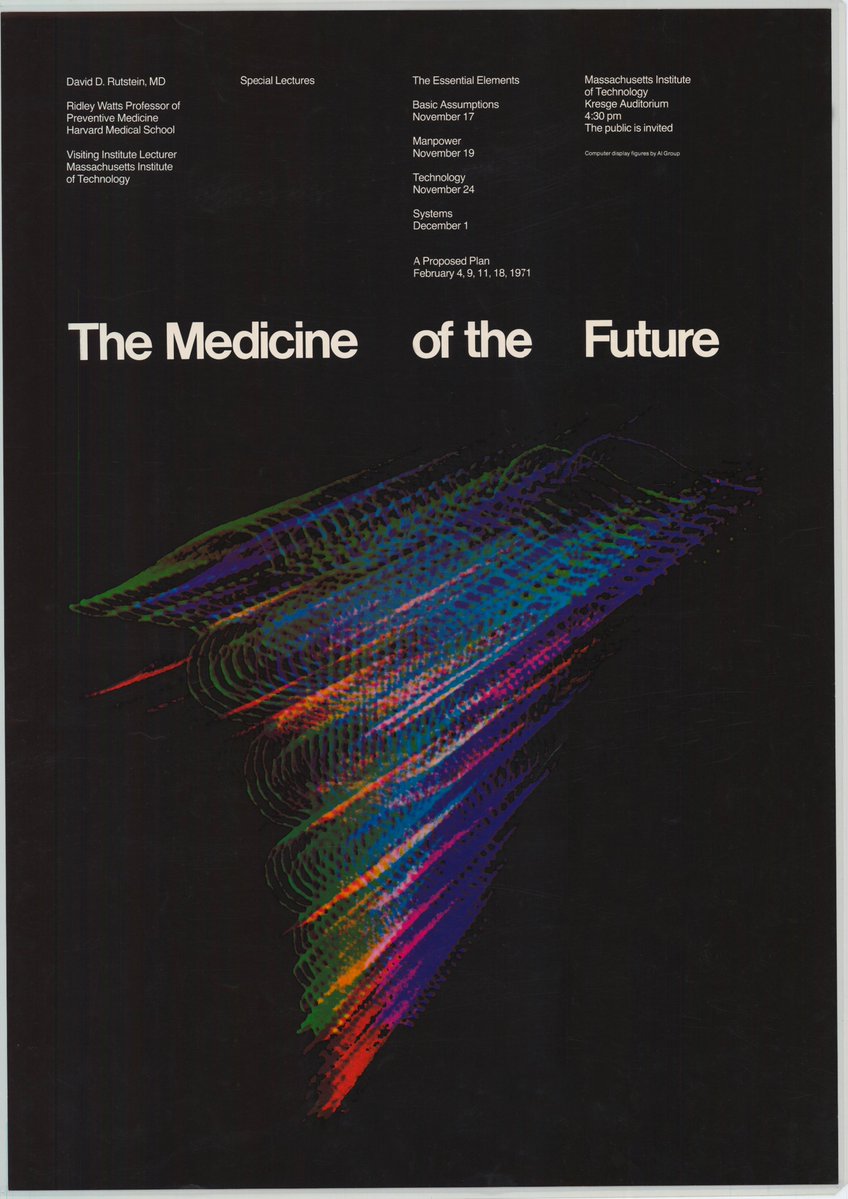
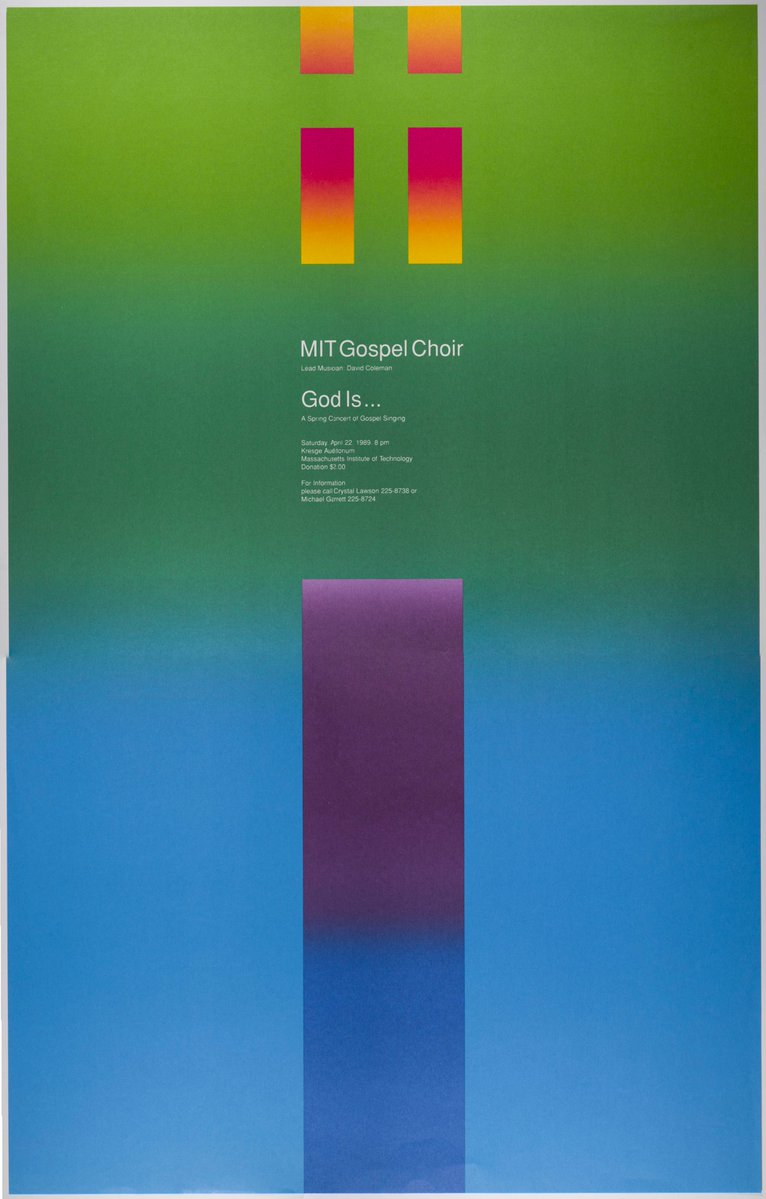

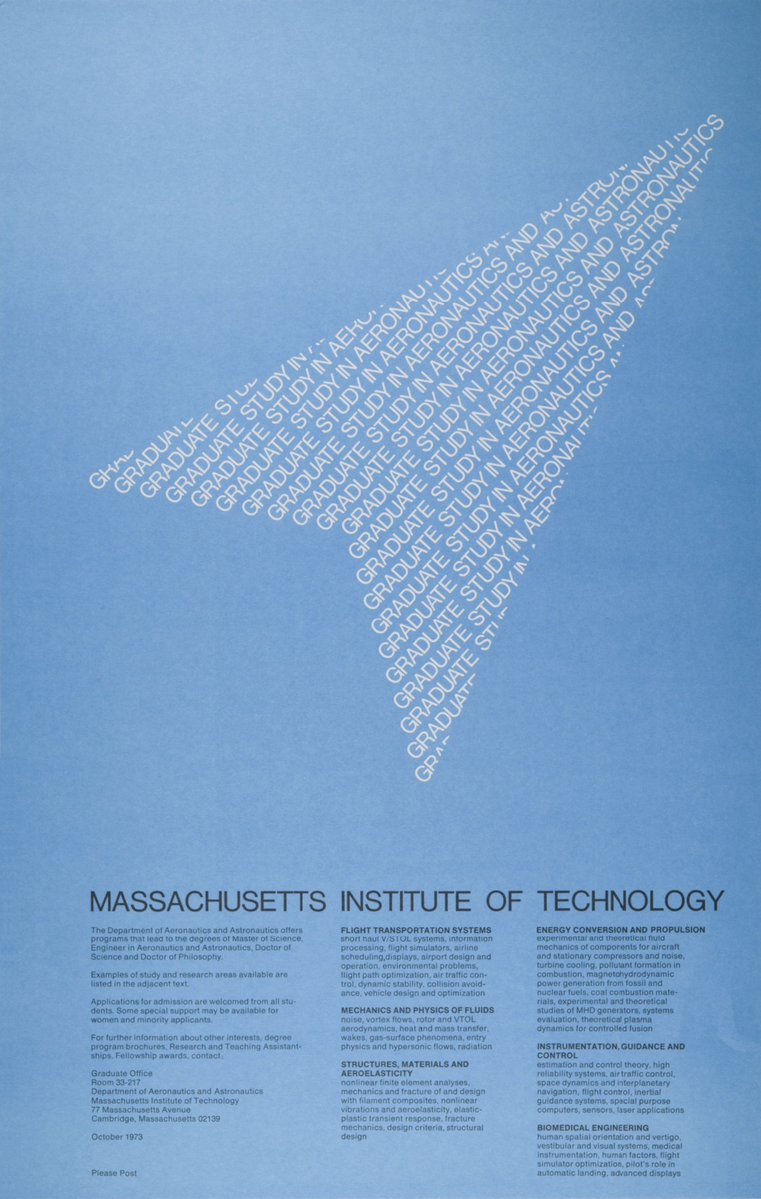


Selected posters by Jacqueline Casey for MIT.
 Eduard @eduardwieandt
We’re excited to introduce ShinkaEvolve: An open-source framework that evolves programs for scientific discovery with unprecedented sample-efficiency.
Blog: https://sakana.ai/shinka-evolve/
Code: https://github.com/SakanaAI/ShinkaEvolveLike AlphaEvolve and its variants, our framework leverages LLMs to find state-of-the-art solutions to complex problems, but using orders of magnitude fewer resources!
Many evolutionary AI systems are powerful but act like brute-force engines, burning thousands of samples to find good solutions. This makes discovery slow and expensive. We took inspiration from the efficiency of nature. ‘Shinka’ (進化) is Japanese for evolution, and we designed our system to be just as resourceful.
On the classic circle packing optimization problem, ShinkaEvolve discovered a new state-of-the-art solution using only 150 samples. This is a big leap in efficiency compared to previous methods that required thousands of evaluations.
We applied ShinkaEvolve to a diverse set of hard problems with real-world applications:
1/ AIME Math Reasoning: It evolved sophisticated agentic scaffolds that significantly outperform strong baselines, discovering an entire Pareto frontier of solutions trading performance for efficiency.
2/ Competitive Programming: On ALE-Bench (a benchmark for NP-Hard optimization problems), ShinkaEvolve took the best existing agent's solutions and improved them, turning a 5th place solution on one task into a 2nd place leaderboard rank in a competitive programming competition.
3/ LLM Training: We even turned ShinkaEvolve inward to improve LLMs themselves. It tackled the open challenge of designing load balancing losses for Mixture-of-Experts (MoE) models. It discovered a novel loss function that leads to better expert specialization and consistently improves model performance and perplexity.
ShinkaEvolve achieves its remarkable sample-efficiency through three key innovations that work together: (1) an adaptive parent sampling strategy to balance exploration and exploitation, (2) novelty-based rejection filtering to avoid redundant work, and (3) a bandit-based LLM ensemble that dynamically picks the best model for the job.
By making ShinkaEvolve open-source and highly sample-efficient, our goal is to democratize access to advanced, open-ended discovery tools. Our vision for ShinkaEvolve is to be an easy-to-use companion tool to help scientists and engineers with their daily work. We believe that building more efficient, nature-inspired systems is key to unlocking the future of AI-driven scientific research. We are excited to see what the community builds with it!
Learn more in our technical report: https://arxiv.org/abs/2509.19349
 Sakana AI @SakanaAILabs